
What’s the Deal with Glyphosate?
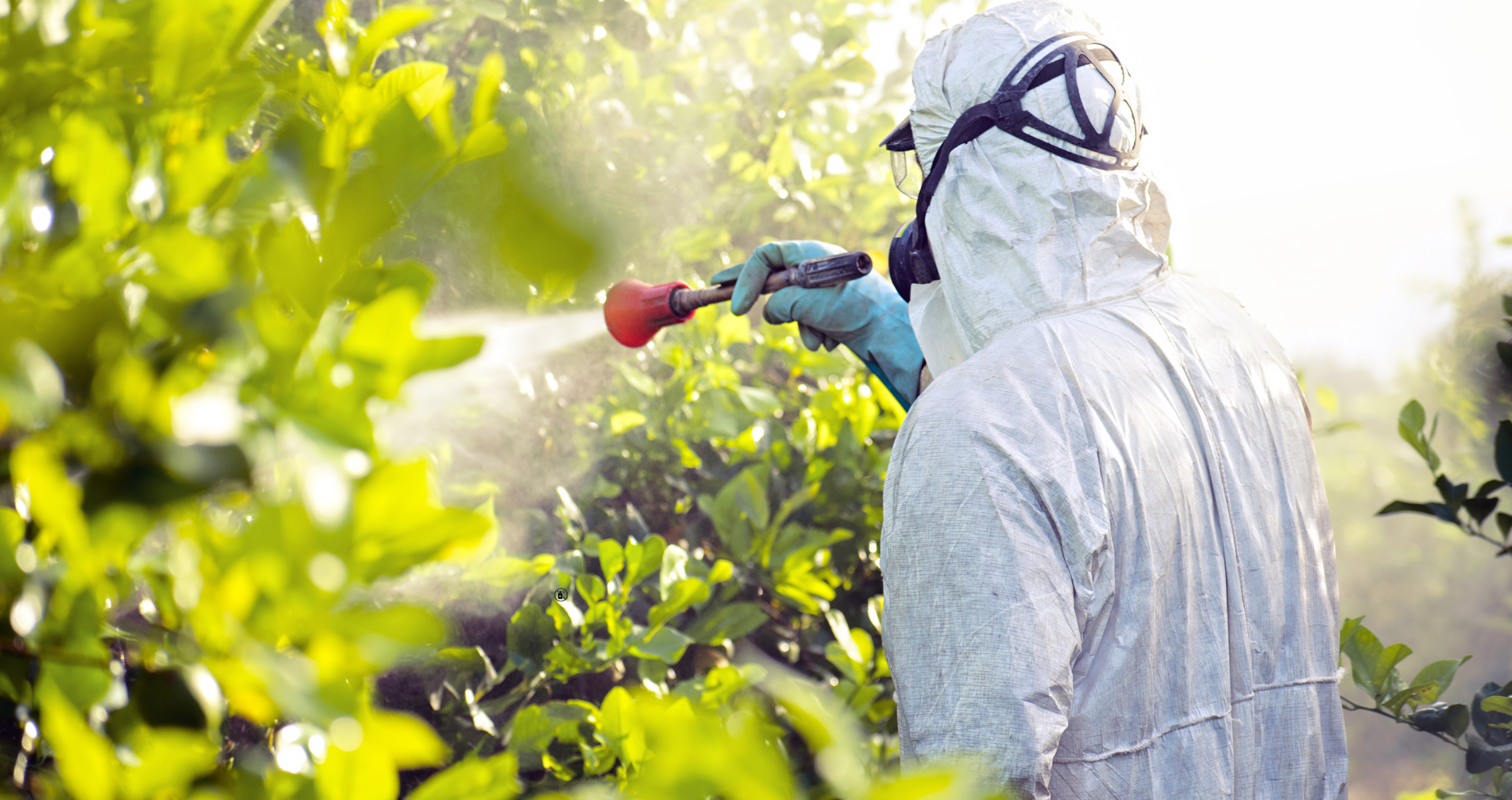
Glyphosate is a synthetic herbicide patented in 1974 by Monsanto, which is now found in hundreds of products sold by many companies. Glyphosate is best known as the active ingredient in Roundup-branded herbicides. Let’s keep in mind that Roundup is the most widely used herbicide in the world. According to a February 2016 study, literally no other herbicide/pesticide comes close to how intensive and widespread glyphosate is used.
-
Americans have used 1.8 million tons of glyphosate since its introduction in 1974.
-
Around the world, 9.4 million tons of glyphosate has been sprayed on fields. To put that into perspective, that’s half a pound of Roundup on EVERY cultivated acre of land IN. THE. WORLD.
-
Globally, glyphosate use has risen almost 15-fold since Roundup Ready GMO crops were introduced.
What are ‘Roundup Ready GMO’ Crops?
Glad you asked. Genetically-modified (GMO) crops that are ‘Roundup Ready’ are designed to be resistant to extreme doses of glyphosate. This allows farmers to spray billions of pounds each year to kill off weeds without destroying their crops.
Since introduced in the United States in 1996, Roundup Ready GMO crops have increased Americans’ exposure to glyphosate 500 percent. Soybean was the first to become genetically engineered so that it could resist glyphosate. Next up was Roundup Ready cotton, maize (corn), canola, alfalfa, sugar beets, and wheat – which is still under development. A stellar statistic (you guys know I live for a good stat) – some 90% of corn and 94% of soybeans in the U.S. are engineered to tolerate herbicides, according to USDA data.
SO, WHY SHOULD WE CARE?
Let’s Talk About Health Risks
We know glyphosate is the most widely used herbicide in the world, but are you familiar with the serious health risks it poses to consumers?
In 2015, the World Health Organization classified glyphosate as “probably carcinogenic to humans”, according to years of published and peer-reviewed scientific studies. I mean ‘probably causes cancer’ is enough to make me want to avoid it, but let’s keep going.
The team of international scientists found a very specific correlation between glyphosate and non-Hodgkin lymphoma. Even so, the Environmental Protection Agency (EPA) issued a report in September of 2016 concluding that glyphosate was “not likely to be carcinogenic to humans”. In December of that year, the EPA’s report was reviewed by a Scientific Advisory Panel who found that the EPA incorrectly evaluated certain research. Oh, also, the EPA’s Office of Research and Development determined that their own Office of Pesticide Programs did not follow proper protocols in their evaluation of glyphosate’s safety, AND said the evidence could be deemed to support that glyphosate is “likely” a carcinogen.

But, nevertheless, a year later the EPA reported glyphosate is not a carcinogen. And again in April of 2019, the EPA confirmed its position that glyphosate poses no risk to public health. Even though that same month the U.S. Agency for Toxic Substances and Disease Registry reported direct links between glyphosate and cancer. According to the report, “numerous studies reported risk ratios greater than one for associations between glyphosate exposure and risk of non-Hodgkin’s lymphoma or multiple myeloma.” And, one month prior, a study published in the International Journal of Epidemiology reported direct links between glyphosate and diffuse large B-cell lymphoma, based on data from more than 30,000 farmers and agricultural workers.
Not to mention in January of 2019, an analysis published in Environmental Sciences Europe argued that the U.S. EPA’s classification of glyphosate disregarded substantial scientific evidence of genotoxicity (i.e. negatively impacting our cell’s genetic material). Oh and in February of 2019, an analysis published in Mutation Research reported a “compelling link” between glyphosate-based herbicides and non-Hodgkin lymphoma.
More than 95,000 cases have filed suit against Monsanto (now Bayer) alleging that exposure to Roundup herbicide caused them or their loved ones to develop non-Hodgkin lymphoma, and that Monsanto covered up the risks.
I’M NOT DONE YET. THIS IS ALSO A GOOD TIME TO REMIND YOU THAT MILLIONS OF POUNDS OF THIS STUFF IS SPRAYED ON OUR FOOD.
A study using human liver cells in vitro showed that even in tiny doses, glyphosate is toxic to human cells, causing genetic mutations, disrupting endocrine function, and promoting oxidative stress. This was proven again in a 2013 study, where glyphosate exposure directly caused breast cancer cells to proliferate by mimicking estrogen. And once again in July of this year, when a paper published in Molecular and Cellular Endocrinology summarized the endocrine-disrupting effects of exposure to glyphosate, particularly on female fertility.
A study published in 2017 examined glyphosate exposure in U.S. pregnant women using urine specimens and found detectable levels of glyphosate in more than 90% of the pregnant women tested. The study also found significant correlation between increased glyphosate exposure and shortened pregnancy lengths, spontaneous abortion, and congenital abnormalities in children.
Glyphosate is great at killing anything that isn’t genetically engineered to resist it. Not only does that mean it wreaks havoc on soil biodiversity but it can also decimate your gut flora. Because of its antibiotic action, ability to deplete amino acids & minerals, and impairing metabolic enzymes, glyphosate consumption is a direct cause of celiac disease.
In case we needed more proof that glyphosate is trash… two Sri Lankan scientists were awarded the 2019 Award for Scientific Freedom and Responsibility for investigating the connection between glyphosate and chronic kidney disease. The scientists found that glyphosate transports heavy metals to the kidneys, leading to high rates of chronic kidney disease.
YALL, THIS IS SOME SERIOUS ISH.

So, what are the professionals saying?
Well, I’m a professional and I’m saying that it should be banned. But… for the sake of science and remaining unbiased:
-
The International Federation of Gynecology and Obstetrics (FIGO) Reproductive and Environmental Health Committee says “we recommend that glyphosate exposure to populations should end with a full global phase out.”
-
A consensus statement in the Environmental Health Journal states “worldwide, glyphosate contaminates drinking water sources, precipitation, and air…The half-life of glyphosate in water and soil is longer than previously recognized. Human exposure to glyphosate is rising. Glyphosate is now authoritatively classified as a probable human carcinogen. Regulatory estimates of tolerable daily intakes for glyphosate in the United States and European union are based on outdated science.
-
A public comment submitted to the EPA in October of 2019 stated that several research papers support a cancer connection to glyphosate and it should be banned. The report was originally submitted under the name of Patrick Breysse, who is the director of the National Center for Environmental Health and the Agency for Toxic Substances and “Numerous studies have linked its use to an increase in lymphomas, and it’s time we stopped letting the chemical industry manipulate research to serve its own interest. U.S. citizens need to trust the Environmental Protection Agency to operate in our best interest, which means weighing evidence from neutral scientific sources not vested in the outcome.”
But in January of this year, the EPA issued an Interim Registration Review, stating:
“The agency concluded that there are no dietary risks of concern for any segment of the population, even with the most conservative assumptions applied in its assessments (e.g., tolerance-level residues, direct application to water, and 100% crop treated). The agency also concluded that there are no residential, non-occupational bystander, aggregate, or occupational risks of concern. The EPA has not made a common mechanism of toxicity to humans finding glyphosate and any other substance and it does not appear to produce a toxic metabolite produced by other substances. Therefore, it was not appropriate for EPA to assess cumulative risks.”
SO I GUESS ALL THOSE PEER-REVIEWED SCIENTIFIC STUDIES AND CANCER LAWSUITS, WHICH BAYER HAS NOW PAID MORE THAN $10 BILLION TO SETTLE, ARE FAKE. GOOD ON YA, EPA. AND AFTER ALL OF THIS, BAYER IS STILL ALLOWED TO SELL THE PRODUCT WITHOUT ADDING WARNING LABELS ABOUT ITS SAFETY.
Where is glyphosate found?
I hate to break it to you, but pretty much everywhere. In 2014 alone, farmers sprayed 1.65 billion pounds of glyphosate on our crops. But, some foods are worse than others. Let’s break it down.
My fave resource, the EWG, completed two rounds of testing on glyphosate. And… unfortunately… the results are infuriating. In EVERY SINGLE SAMPLE tested by the EWG, glyphosate was found. This particular study sampled Quaker, Kellogg’s, & General Mills products, because these three companies have historically claimed there is no cause for concern & that their products meet legal standards.
Welp, not so fast. 28 samples were tested. Glyphosate was detected in all 28 samples. 26 of those samples had residues of glyphosate at levels higher than what is considered safe. These samples included 10 different types of General Mills’ Cheerios and 18 different Quaker brand products from PepsiCo, including instant oatmeal, breakfast cereal, and snack bars. The highest level of glyphosate found by the lab was 2,837 ppb in Quaker Oatmeal Squares breakfast cereal, nearly 18 times higher than EWG’s children’s health benchmark.
To check out a complete list of the EWG’s glyphosate tests in oat cereals and snacks, click here.
Friends of the Earth tested 30 samples of oat products and 27 samples of dry pinto beans, and found glyphosate in every sample tested. Between 2015 and 2016, the Canadian Food Inspection Agency found glyphosate in other grain and bean products, including buckwheat and barley, kidney and pinto beans, and chickpeas. The Canadian public interest group Environmental Defence and Équiterre followed up on these results, with tests that found glyphosate in hummus and several wheat-based products, like crackers and tortillas.
Before the FDA suspended it’s program to test food for residues of glyphosate in 2017, one FDA chemist found alarming levels of glyphosate in many samples of U.S. honey (ten times the levels allowed in the EU), levels that were technically illegal because there have been no allowable levels established for honey by the EPA.
The FDA also has reported high levels of glyphosate found in almost 70% of corn and soybean samples & oatmeal and baby foods.

Meanwhile, independent testing by consumer groups, such as Food Democracy, The Canadian Food Inspection Agency, and SumOfUs, have found unsafe levels in (ppb = parts per billion):
-
Doritos
-
Oreos
-
Goldfish
-
Stacy’s Pita Chips
-
Ritz Crackers
-
Honey Nut Cheerios (830 ppb) 5 times over the recommended limit
-
Nature Valley Crunchy Granola Bars, Maple Brown Sugar (566 ppb)
-
Nature Valley Granola Cups, Almond Butter (529 ppb)
-
Chocolate Peanut Butter Cheerios (400 ppb)
-
Nature Valley Baked Oat Bites (389 ppb)
-
Nature Valley Crunchy Granola Bars, Oats and Honey (320 ppb)
-
Nature Valley Crunchy Granola Bars, Peanut Butter (312 ppb)
-
Nature Valley Granola Cups, Peanut Butter Chocolate (297 ppb)
-
Nature Valley Fruit & Nut Chewy Trail Mix Granola Bars, Dark Chocolate Cherry (275 ppb)
-
Nature Valley Granola Protein Oats n Dark Chocolate (261 ppb)
-
Multi Grain Cheerios (216 ppb)
-
Nature Valley Soft-Baked Oatmeal Squares, Blueberry (206 ppb)
-
Fiber One Oatmeal Raisin Soft-Baked Cookies (204 ppb)
-
Nature Valley Granola Peanut Butter Creamy & Crunchy (198 ppb)
-
Nature Valley Biscuits with Almond Butter (194 ppb)
-
Mueller’s Penne Dry Pasta
-
Mueller’s 100% Whole Grain Penne Dry Pasta
-
Harris Teeter 100% Durum Semolina Penne Rigate Dry Pasta
-
Signature Select Thin Spaghetti Dry Pasta
-
Barilla Whole Grain Rotini Dry Pasta
-
Kellogg’s All Bran Buds Cereal
-
General Mills Wheat Chex
-
Kellogg’s Frosted Flakes
-
Tampax tampons and pads
-
Always tampons and pads
-
And other foods such as: almonds, beets, beet sugar, canola oil, carrots, corn oil, quinoa, sweet potatoes, chickpea flour, lentils, & vegetable oil
Interestingly enough, Germany has banned glyphosate nationwide. This is particularly important because Bayer, who acquired Monsanto in 2018, is a German-based company…. Scratching my damn head.
So Germany’s plan is to completely phase out glyphosate by 2023. & they aren’t the only ones.
More than 40 other countries have ordered restrictions on glyphosate. But until the U.S. gets onboard…
What can we do?
-
Avoid eating non-organic oats and grains
-
Buy organic produce to avoid any herbicides or pesticides. When you spray as much glyphosate into our environment as we are, small amounts are sometimes still detected in the ground of completely organic farms. However, people eating an organic diet have significantly lower glyphosate levels in their systems.
-
Look for foods labeled “glyphosate-free”
-
Grow your own produce to ensure your produce is glyphosate-free. You can either grow the produce near a bright window in your kitchen or you can start an outdoor garden. Choose organic seeds or cuttings from organic produce you’ve already bought to start your produce garden.
-
Support groups trying to ban glyphosate to prevent future contamination
-
Clean contaminated produce correctly
-
Wash produce in a baking soda solution by combining 1 teaspoon of baking soda with 2 cups of cold water and stirring together until it’s thoroughly mixed. Put the produce you want to wash in the solution and let it soak up to 15 minutes. The baking soda in the solution will help lift and remove any glyphosate residue off of the produce so it’s safer to eat.
-
Wash your fruits or vegetables even if they have an inedible outer layer, such as bananas or oranges. Glyphosate can stick to the outside and contaminate other items it comes into contact with.
-
-
Rinse the produce under water to clean off the baking soda solution. Set a colander in your sink and pour the produce into it. Run clean water from your sink over the produce for 1-2 minutes, shaking and moving the fruits and vegetables around so they’re rinsed evenly. When you’re finished, turn off your faucet and shake out any excess water Avoid soaking your produce to rinse it since the glyphosate residue may stay in the water and stick to your food
-
Dry your produce with paper towel to remove any stuck-on residue. Take the produce out of your colander and dry it individually on separate paper towels. Wipe the produce completely clean to remove any leftover residue that might still stick to the surface. Don’t use the same paper towel for different produce items since you may reapply the residue
-
Cut off the outer layer of produce if you want to get rid of absorbed contamination. Glyphosate residue can absorb into the produce through the rind or peel so it still may be contaminated even if you wash it. Use a peeler or a knife to cut off the outer skin on the fruits or vegetables and throw the peels away to avoid any contamination risks
-
Alright. Rant over.
Despite the EPA’s stance, we know that studies have found glyphosate exposure to be linked to anywhere from a 41 percent to 70 percent increased risk of non-Hodgkin lymphoma and an increased risk in bladder cancer.
So with that. I want to end by saying… all of this is not meant to scare you. It’s meant to empower you to make better decisions for you and your family. It’s meant to help us take control of what we are [and are not] putting in our kids’ bodies. Our health is sacred, I’m here to help you protect it!
Copyright 2022 The Discovery Doc, LLC®. All Rights Reserved.
The Discovery Doc – Dr. CeCe Brooks – Atlanta Holistic NP

Dr. CeCe
Back to topBack to Blog